
How to Choose the Right Dictation Challenge for Your English Level
Have you ever listened to an English conversation and understood almost nothing, even though you recognized most of the words? This is a common challenge for English learners. Understanding spoken English requires more than knowing vocabulary and grammar. You also need to recognize pronunciation, follow natural speech patterns, and process information quickly.
One practical way to develop these abilities is through English dictation challenges. These exercises encourage you to listen carefully, identify individual words, and write down exactly what you hear. However, not every dictation challenge is suitable for every learner. An exercise that feels too easy may not help you progress, while one that is too difficult can quickly become frustrating.
The key is choosing activities that match your current English proficiency. Whether you are just beginning or already understand complex conversations, finding the right level can make your listening practice more productive and enjoyable.
In this guide, you will discover why dictation works, how to select exercises based on your abilities, and how to use resources such as MicroEnglish dictation exercises to build your listening confidence step by step.

Why Dictation Challenges Are Effective for Learning English
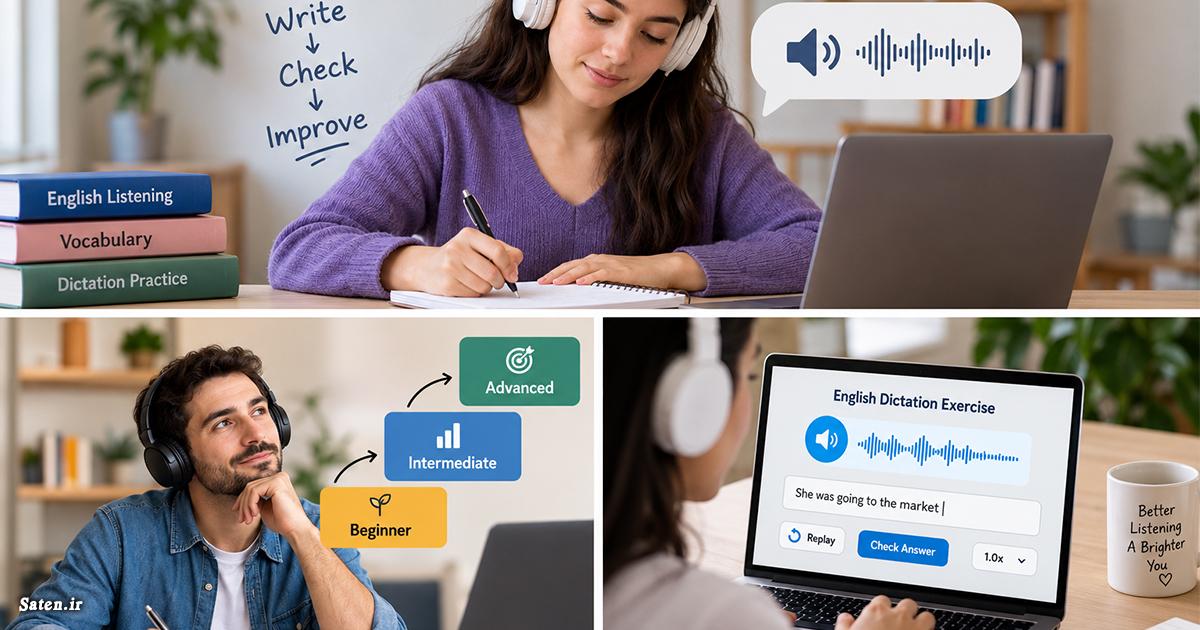
Dictation is a language learning technique in which you listen to an audio recording and write down the words you hear. Although the process sounds simple, it combines several important language skills into a single activity.
Unlike passive listening, where you might understand the general meaning without noticing individual words, dictation requires focused attention. You must recognize sounds, connect them to familiar vocabulary, and understand how words fit together in a sentence.
One of the biggest benefits of English dictation practice is improved listening accuracy. English speakers often connect words, reduce vowel sounds, and pronounce common expressions differently in natural conversation. These features can make even familiar sentences difficult to understand.
For example, you might easily recognize the sentence “What are you going to do?” when reading it. However, in everyday conversation, the words may sound connected or reduced. Regular dictation practice helps you become familiar with these pronunciation patterns.
Dictation challenges can also support other aspects of language learning:
- Better listening comprehension: Careful listening helps you recognize words and phrases that you might otherwise miss.
- Stronger vocabulary recognition: Hearing familiar words in different contexts makes them easier to identify during conversations.
- Improved spelling: Writing what you hear strengthens the connection between spoken and written English.
- Greater grammatical awareness: Dictation encourages you to notice articles, prepositions, verb endings, and other small but important details.
- Increased confidence: Successfully completing progressively challenging exercises can make real English conversations feel less intimidating.
Another advantage is the immediate feedback that many online dictation platforms provide. Instead of guessing whether you understood a recording correctly, you can compare your answer with the original sentence and identify specific mistakes.
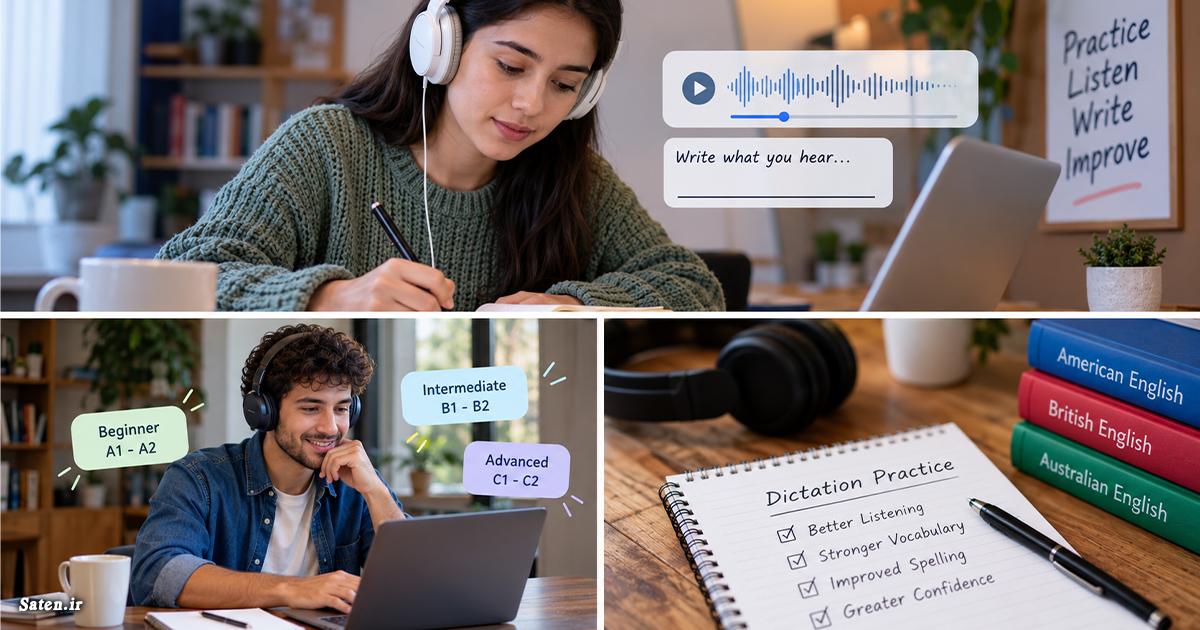
For instance, MicroEnglish allows learners to listen to short recordings, type their answers, and check which words they missed. Users can also replay audio, adjust playback speed, and practice with available American, British, and Australian accents.
These features make dictation a practical option for learners who want to improve their listening skills through short, focused activities.
However, to get the most value from these exercises, you need to choose challenges that reflect your current abilities rather than simply selecting the most difficult recordings.
How to Find the Right Dictation Challenge for Your Skill Level
Choosing an appropriate dictation challenge begins with understanding your English level. Many language learning resources use the Common European Framework of Reference for Languages (CEFR), which organizes proficiency into six levels, from A1 for beginners to C2 for highly proficient users.
Your ideal dictation exercise should be challenging enough to introduce something new but manageable enough that you can understand the main idea.
A useful starting point is to listen to a recording once without looking at the transcript. Ask yourself whether you understand the topic, recognize most of the vocabulary, and can identify the main sentence structure.
If you understand almost everything immediately, the recording may be too easy for focused listening development. If you recognize very few words after several attempts, the material may be too advanced.
As a practical guideline, try selecting recordings where you understand most of the message but still miss a few words or expressions. This creates opportunities to learn without overwhelming yourself.
It is also important to consider the following factors when choosing dictation exercises for English learners:
- Audio length: Short recordings are easier to manage, especially for beginners.
- Speaking speed: Slower, clearly pronounced sentences are generally more accessible than fast natural speech.
- Vocabulary difficulty: Familiar everyday words are a better starting point than specialized terminology.
- Sentence complexity: Simple sentences are easier to process than recordings containing multiple clauses and unfamiliar grammar.
- Accent familiarity: Practicing with different English accents can gradually improve your ability to understand a wider range of speakers.
Once you identify the right difficulty, you can choose exercises that target your specific weaknesses.

Beginner: Start with Short and Simple Audio
If you are at the A1 or A2 level, your priority should be recognizing familiar vocabulary and understanding basic sentence structures.
Beginner dictation challenges work best when they focus on short, clear recordings that contain commonly used English expressions. At this stage, lengthy conversations or rapid speech can make it difficult to distinguish individual words.
Instead, start with sentences related to familiar situations, such as introducing yourself, describing daily routines, shopping, or talking about family members.
For example, a beginner exercise might include sentences such as:
- “I usually wake up at seven.”
- “She works in a small office.”
- “We are going to the supermarket.”
- “My brother likes playing football.”
These examples use familiar vocabulary and relatively simple grammar, allowing you to concentrate on recognizing spoken words.
A helpful beginner routine involves listening to a short recording once, writing down what you understand, and replaying it to fill in missing words. After checking your answer, listen again while reading the correct sentence.
Pay particular attention to small grammatical words such as “a,” “the,” “is,” and “are.” Although these words may appear simple in written English, they are often difficult to recognize in connected speech.
Beginners should also avoid focusing entirely on perfect spelling during their first attempt. Understanding the spoken message and identifying words accurately are more important starting goals.
Platforms with short, level-based recordings can make this process easier. For example, MicroEnglish organizes its dictation lessons by proficiency level, allowing learners to explore A1 and A2 exercises before progressing to more demanding material.
The goal at this stage is consistency. Completing a few short dictation exercises regularly can help you develop a stronger foundation for future listening practice.
Intermediate: Practice Everyday Conversations
Intermediate learners, typically at the B1 or B2 level, often understand straightforward English conversations but struggle when speakers use natural expressions, contractions, or unfamiliar sentence patterns.
At this stage, dictation practice should move beyond isolated basic sentences and introduce more realistic language.
Choose recordings based on everyday situations, including making plans, discussing work, arranging appointments, describing experiences, or expressing opinions.
For example, an intermediate dictation challenge might include sentences such as:
- “I was going to call you, but I completely forgot.”
- “Have you decided what you want to do this weekend?”
- “We’ve been trying to solve this problem all morning.”
- “Could you let me know when the meeting starts?”
These sentences introduce contractions, longer grammatical structures, and expressions frequently used in spoken English.
One particularly important skill for intermediate learners is recognizing connected speech. Native and fluent English speakers rarely pronounce every word separately. Instead, words naturally flow together, making certain sounds less noticeable.
Consider the expression “Did you.” In everyday speech, the sounds may blend together, making the phrase sound different from its written form.
Dictation challenges help learners notice these differences and become more comfortable with natural pronunciation.
To make your intermediate listening practice more effective, try completing each exercise in three stages.
First, listen to the complete recording without stopping and identify the general meaning. Second, replay the audio and write the words as accurately as possible. Finally, compare your answer with the transcript and focus on the sections you misunderstood.
You can also repeat difficult sentences aloud after completing the dictation. This connects listening practice with pronunciation and speaking development.
For additional variety, practice recordings in different English accents. MicroEnglish offers accent choices in its dictation activities, making it possible to explore differences between American, British, and Australian pronunciation where recordings are available.
Intermediate learners should gradually increase the complexity of their exercises while maintaining enough familiarity to understand the overall context.
Advanced: Challenge Yourself with Natural Speech
Advanced English learners at the C1 or C2 level usually understand a wide range of spoken English. However, accurately identifying every word in rapid conversations, unfamiliar accents, or complex discussions can still be challenging.
At this level, the purpose of dictation practice changes. Instead of concentrating mainly on basic vocabulary recognition, advanced learners should focus on precision, subtle pronunciation differences, and complex language structures.
Suitable advanced dictation challenges may involve natural speech patterns, sophisticated vocabulary, idiomatic expressions, and sentences with multiple clauses.
For example, an advanced exercise might feature a sentence such as:
“Despite the unexpected complications, the team managed to complete the project ahead of schedule.”
Another example could be:
“Had I known how complicated the situation would become, I might have approached it differently.”
These sentences require careful attention to grammatical structure, word endings, and the relationship between different parts of the sentence.
Advanced learners can also benefit from practicing with authentic materials, including interviews, podcasts, lectures, and discussions involving different speakers. Such recordings often contain hesitation, reduced sounds, interruptions, and changes in speaking speed.
One effective technique is to complete the first dictation attempt at normal playback speed. Avoid slowing down the recording immediately, since part of the challenge is learning to process English in real time.
After your first attempt, replay difficult sections and identify exactly what caused the misunderstanding. Was the problem unfamiliar vocabulary, an unexpected pronunciation, or a grammatical structure you did not recognize?
Keeping track of these patterns can help you choose future exercises more strategically.
For example, if you frequently miss reduced function words, focus on recordings that feature natural connected speech. If unfamiliar accents are your main difficulty, alternate between different pronunciation varieties.
Advanced learners should also remember that difficult material is not automatically better. Even at C1 or C2, an exercise that contains too many unfamiliar words may become more of a vocabulary test than a listening challenge.
A balanced approach combines demanding exercises with recordings that allow you to concentrate on accuracy and fluency.
Ultimately, choosing the right dictation challenge is about understanding your current abilities and increasing the difficulty gradually.
Beginners benefit from short recordings and familiar vocabulary, intermediate learners need realistic conversational language, and advanced students can challenge themselves with complex sentences and natural speech.
Whatever your level, regular practice and thoughtful review are more valuable than completing difficult exercises without understanding your mistakes. By choosing suitable activities and gradually expanding your listening abilities, you can make English dictation a useful part of your long-term language learning routine.
Frequently Asked Questions
What is an English dictation challenge?
An English dictation challenge is a listening exercise in which you hear a recording and write down the words being spoken. It helps improve listening comprehension, spelling, vocabulary recognition, and awareness of natural English pronunciation.
How do I choose the right dictation level?
Start with a recording that matches your current English proficiency. If you understand most of the content but miss a few words, the difficulty is probably appropriate. If the recording is almost impossible to follow, choose an easier level.
Are dictation exercises suitable for beginners?
Yes. Beginners can benefit from short recordings containing familiar words and simple sentences. Starting with A1 or A2 exercises allows learners to develop listening accuracy before moving on to longer and more complex recordings.
How often should I practice English dictation?
Practicing for approximately 10 to 15 minutes a day is a practical starting point. Consistent practice, combined with checking and correcting mistakes, is generally more useful than occasional long sessions.